Amore, amicizia e odio – For Your and Our Future
di Lina Kostenko
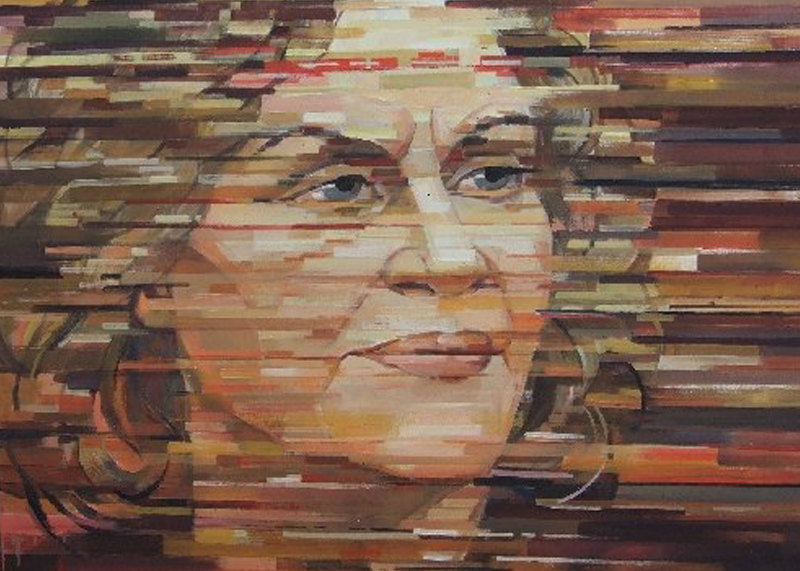
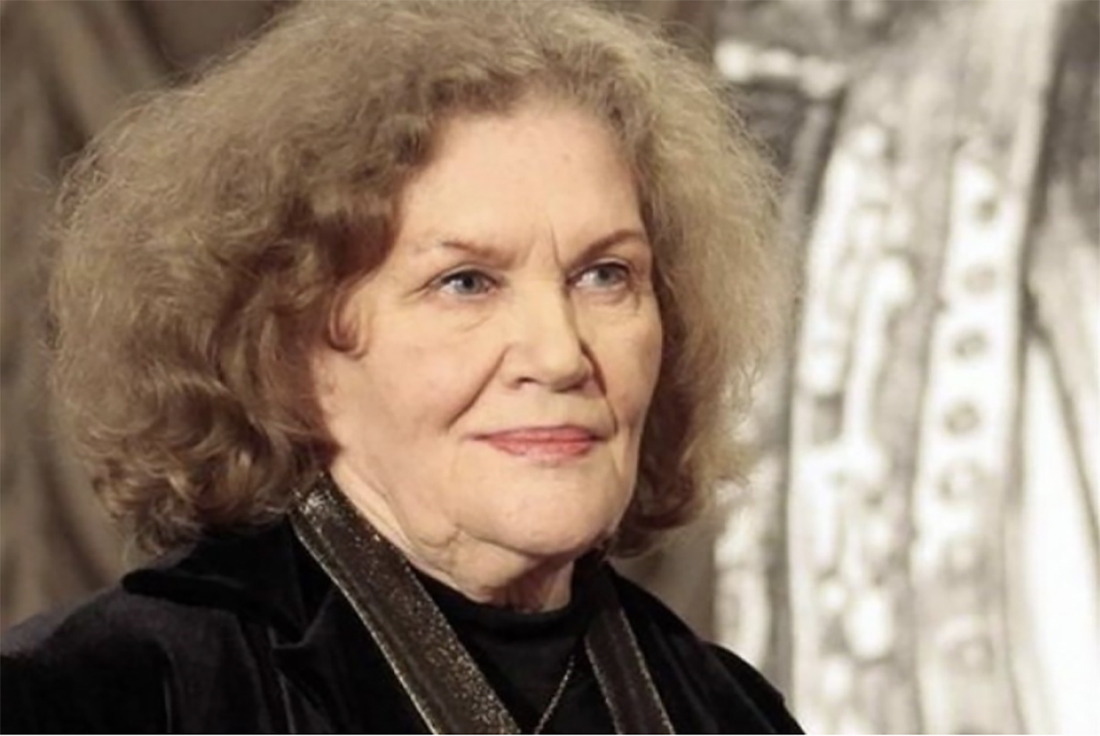
In copertina: Lina Kostenko ritratta da Volodymyr Sljepčenko, 2012
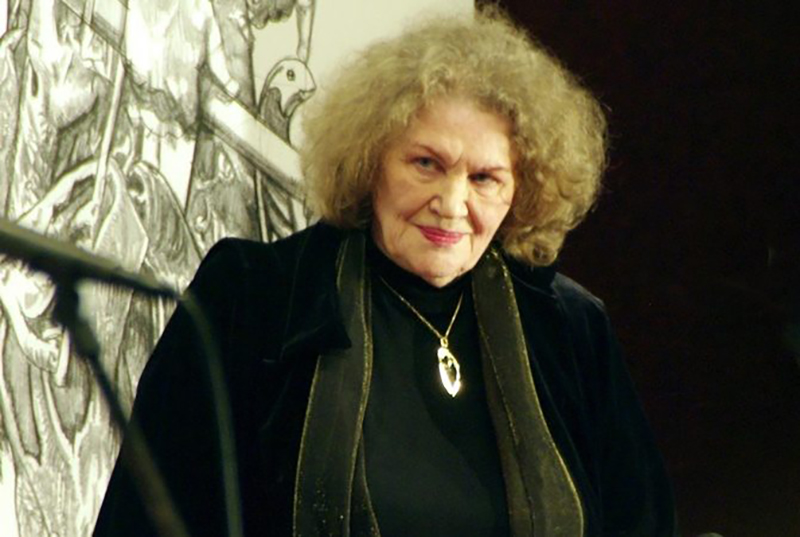
L’anno scorso presso il Forum Austriaco di Cultura di Roma, con la collaborazione dell’Ambasciata d’Ucraina nella Repubblica Italiana, si è tenuta una serata musicale e letteraria dedicata al 95° compleanno della poetessa ucraina Lina Kostenko. Un incontro intitolato: Lina Kostenko: „Io sono albero, neve, tutto, quel che amo. Forse è questa l’essenza mia suprema” – «Я дерево, я сніг, я все, що я люблю. І, може, це і є моя найвища сутність».
Vedi la descrizione dell’evento.
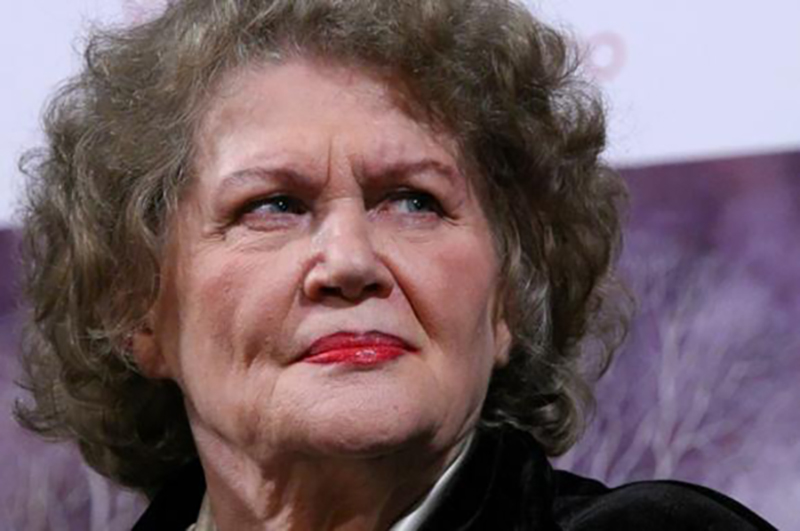
In quell’occasione Lina Kostenko ha scritto il seguente testo che, per la sua attualità, riproponiamo oggi grazie alla cortesia di Oxana Pachlovska.

Cari amici e colleghi, cari traduttori, spettabili autorità diplomatiche, stimati organizzatori e partecipanti di questa serata! Ringrazio tutti coloro che hanno ideato e organizzato questo incontro al Forum Autriaco di Cultura a Roma. Ringrazio anche per il titolo di questa serata che cita una mia poesia: “Io sono albero, neve, tutto quel che amo. / Forse è questa l’essenza mia suprema”. In questi tempi bui, così carichi di odio ed incertezza che stiamo vivendo oggi, non è un caso che Voi abbiate messo l’accento sulla dimensione esistenziale dell’amore. È un sentimento trasversale verso tutto quello che è vivo e indifeso, creativo ed autentico. Un sentimento che salva noi stessi. La guerra deforma il tempo e lo spazio, ci intrappola in un labirinto di tenebre. Solo con l’aiuto dell’amore, di quel filo d’oro di Arianna, possiamo provare a trovare l’uscita dal labirinto del Minotauro.
Oggi in Ucraina conosciamo tutta la complessità del sentimento d’amore, come anche la sofferenza e il senso di responsabilità che accompagnano questo sentimento. È l’amore per la Patria minacciata, verso il suo passato e verso il suo futuro, verso una dimensione familiare della Patria, verso ogni persona offesa, verso ogni difensore del Paese che combatte eroicamente o tragicamente muore. L’amore verso ogni Madre che non supererà mai il dolore di questa perdita. D’altro canto, oggi su di noi si abbatte un Odio, un odio totale e assoluto, un odio generato dalla visione distorta del mondo, un odio che si ciba solo di morte e di distruzione. Lo scrittore deve vivere tutti questi eventi e descriverli, chiedendosi ogni volta se il mondo sentirà mai queste nostre voci dal limite più tragico della storia europea e della storia mondiale oggi.
Il nostro dialogo avviene tra due poli contrapposti della nostra civiltà. Al momento vi trovate nella meravigliosa sede del Forum Austriaco di Cultura a Roma, circondati da architettura raffinata, immersi nella luce, nei libri, nella musica. Mentre qui, anche quelli di noi che non si trovano fisicamente al fronte, è come se ci trovassimo in mezzo ai campi minati. Ogni nostro passo, ogni nostro respiro potrebbe essere l’ultimo. È la stessa percezione che ho vissuto da bambina attraversando i campi minati durante l’occupazione nazista. Oggi viviamo la stessa esperienza in Ucraina. Questa volta, l’occupante è venuto non dall’Ovest, ma dall’Est. La stessa Morte che ha cambiato solo maschera.
Forum Austriaco di Cultura a Roma: questi tre termini non solo definiscono una stimata istituzione, ma racchiudono dentro tanta storia. Nell’Ottocento l’Austria degli Asburgo ha cercato di sottomettere l’Italia risorgimentale avendo nel suo assetto l’attuale Ucraina occidentale come una provincia depressa e riottosa. Oggi qui non ci sono più né imperi né rivoluzioni. Ci sono invece tre stati indipendenti. Oggi a Roma la cultura austriaca apre il suo spazio alla poesia e alla musica ucraina. Questo rappresenta sviluppo, trasformazione. Insieme tutto questo è Europa. Dalla parte della Russia non è cambiato nulla, e non solo a partire dall’Ottocento, ma anche a partire dal Sette e dal Seicento. Domina la stessa voglia di sottomettere l’Ucraina, di distruggere la sua cultura, la sua lingua, la sua identità. Questo significa l’assenza del cambiamento, l’antagonismo nei confronti dell’Europa, un vicolo cieco della storia.
Perché allora distruggere l’Ucraina? Solo perché l’Ucraina storica e l’Ucraina odierna in tutte le condizioni della sua vita si è sempre sentita, come si sente adesso, parte integrante dell’Europa. E sta pagando per questa sua convinzione, per questo dono, così naturale da essere quasi scontato per l’Unione Europea, il prezzo più terribile: il prezzo del sangue. Per questa ragione ogni incontro di questo tipo non è solo un’occasione per ascoltare poesia e musica. È anche un’occasione per ascoltare la voce della storia, perché la musa Clio parla di cose severe e drammatiche. E non solo racconta, ma in primis avverte.
Ecco perché sono infinitamente grata a Voi tutti per questa bellissima serata in cui s’incontrano poesia e musica, Oriente e Occidente d’Europa, il lavoro di professionisti esperti e quello di giovani, di studenti dei corsi di Studi Ucraini della Sapienza. Una mia particolare gratitudine va a due eccellenti traduttori della letteratura ucraina, alla Professoressa Giovanna Brogi e al Professor Alois Woldan. Nella sfera scientifica e traduttoria si tratta di due figure monumentali dell’Ucrainistica europea. Hanno cominciato a costruire la disciplina molto tempo prima della nascita dell’Ucraina indipendente e dopo, negli anni, hanno sviluppato la disciplina a livello europeo e mondiale. Ma sono anche personalmente nostri amici che sono stati accanto all’Ucraina in tutti i periodi più drammatici della nostra storia. Per questo qui va anche sottolineato il grande valore simbolico di questo nostro incontro.
Nei lontani tempi sovietici – quando i miei libri non potevano essere pubblicati e il mio nome era proibito – colpita dalla morte di Ingheborg Bachmann ho scritto una poesia dal titolo Ballata sul fumo. Ho sempre amato questa scrittrice. Il suo credo “Esisto solo quando scrivo” era anche il mio. Mi ha stravolto la solitudine di Ingheborg che stava bruciando sul falò delle proprie poesie. Ho immaginato il fumo che vorticava dal suo appartamento romano, si trascinava per le scale, s’affacciava nelle finestre chiedendo l’aiuto, ma nessuno si è svegliato per salvare il poeta. Correva l’anno 1973 in cui in Ucraina continuavano arresti e processi nei confronti di intellettuali dissidenti. Tutto sommato per me erano fenomeni simili. Ingheborg Bachmann epitomizzava anche la nostra solitudine, la solitudine dell’intellettuale nel mondo di oggi. Di quell’intellettuale, insomma, che dice una verità scomoda per tanti. Pronto a morire per questa verità. Mentre pochi sono pronti a sentirla.
Nonostante ciò, i tempi cambiano, spesso in peggio, ma anche in meglio. Pur senza vedervi, Vi sento vicini, e mi trovo accanto a Voi. Oggi l’Europa ci ha aiutato a superare questa nostra solitudine ucraina su tantissimi livelli dopo aver compreso le ragioni e lo scopo della nostra lotta. Anche Voi qui in questa sala ci aiutate a superare questa solitudine, aprendo le vostre anime alla poesia, alla musica e alla comprensione dell’Ucraina sofferta, ma ferma nella sua resistenza. Che sia con Voi tutti la luce della musica e della poesia, e insieme ad esse la nostra gratitudine per Voi, oggi e sempre!
Lina Kostenko, Kyiv, 15 marzo 2025
Riproponiamo un secondo testo di Lina Kostenko, questa volta in inglese, scritto in occasione della consegna il 30 aprile 2025 a Washington dell’onorificenza del metropolita Andrej Šeptyc’kyj da parte di due associazioni ebraico-ucraine. Anche quella fu un’occasione per riflettere sulle tante cose che legano insieme ebrei, polacchi, ucraini…
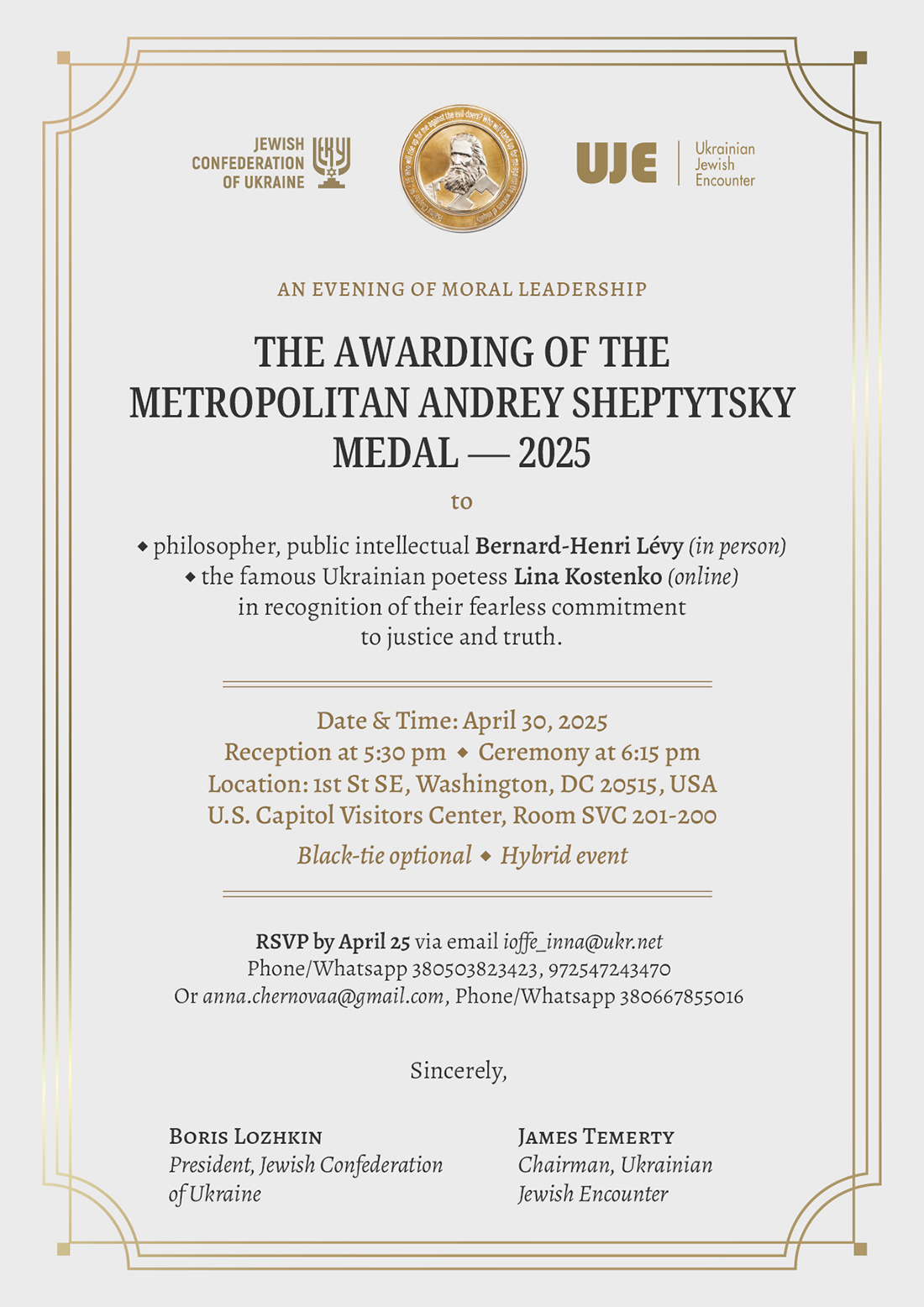
Metropolitan Andrey Sheptytsky Medal – 2025
For Your and Our Future
Dear friends and colleagues, distinguished guests! First of all, my great gratitude to the Jewish Confederation of Ukraine, as well as the Ukrainian Jewish Encounter (UJE) for awarding me the Metropolitan Andrey Sheptytskyi Medal (1). This is a great honour. And this is an unexpected award for me, which takes on special significance in these tragic times for Ukraine and Israel.
When and how did the Jewish world enter my life? Through empathy, through compassion. My childhood fell on World War 2. We lived on Trukhaniv Island – it was a beautiful part of Kyiv opposite the monument to St. Volodymyr. As I remember today: my little friend Yosya is walking to school along the banks of the Dnipro River and singing at the top of his lungs. The war forced us to leave that corner of paradise. The island was actually destroyed during the battles for Kyiv. When we returned there again, there were very few people on the island, and Yossi Yosya was not among them. And then we heard the terrible news: Yossi Yosya was shot along with other Jews in Babyn Yar. Before that, in school, children did not even think about who was of what nationality. So, the understanding of Yossi Yosya’s identity came with his death. For the rest of my life, I have not been able to understand how a little boy singing on the golden sand on the banks of the Dnipro River could be shot.
I remember another voice from my childhood. We had a record at home with an old Jewish song “Akhtsik Yor”, “Eighty Years”. I did not understand the words, but I was struck by this sad deep male voice in contrast to the light, bright melody.
After the war, an action called “the fight against cosmopolitanism” made a heavy impression on me. It was 1948. Among my friends were Ukrainian Jewish writers. And I suddenly saw a void forming around them. They were avoided, not greeted. They were declared “cosmopolitans without relatives,” enemies of the Soviet regime. I continued to communicate with them as a matter of principle, trying to overcome their vacuum of loneliness while remembering the immense loneliness experienced by repressed Ukrainian writers. They had just been called “bourgeois nationalists.”
And then there were the sixties when I entered literature. A few short years of publications, then sixteen years of prohibition. For us, who were then the generation of the sixties, the Jewish question was extremely important, just like the Crimean Tatar or Polish question. Knowing from our own experience what imperial and totalitarian violence against peoples is, we also defended the identity of these persecuted peoples. It is all the more painful today to see how not only Russia, but also many in the West ignore the rights of the Crimean Tatar people, deported in 1944, a people for whom Crimea is the only Motherland. In those 60s, my good acquaintance was Anatoly Kuznetsov, who lived close to Babyn Yar and saw that tragedy with the eyes of a child. He sent me a version of his novel about Babyn Yar, not distorted by censorship. At that time, I was translating Jewish poets. It was still completely impossible to imagine that an independent Ukraine would ever emerge, but we saw this long-dreamed-of free Motherland as a European state, where each nation was to have its own voice and its own form of cultural existence.
In this regard, I want to remember my great friend Ivan Dzyuba, whom we miss so much today. And who also received this honorary medal at one time. That Ivan Dzyuba, a Donetsk resident, one of the most prominent dissidents of the 60s, who died on 22 February 2022, literally on the eve of the Russian invasion of Ukraine, as if refusing to see what would happen to his Donetsk region, to his Ukraine. He was buried on the day the war began, as if killed by the war. Actually, it was Dzyuba who first spoke about Babyn Yar on 29 September 1966 as a common tragedy and common memory of Jews and Ukrainians. He said this in the atmosphere of state anti-Semitism, with the help of which – after the catastrophe of the Holocaust – the Soviet regime continued its persecution, denying Jews even the right to mourn their dead. And denying Ukrainians the right to even remember the catastrophe of the Holodomor. In September of this year, an exhibition of paintings depicting the historical dramas of Jews and Ukrainians will open in New York. The author of the paintings – Yohanan Petrovsky-Shtern an amazing example of Jewish-Ukrainian intellectual and artistic symbiosis – called this cycle of his works “Confronting Catastrophes”. In fact, each catastrophe is unique. But we – together with the Jews, with the Poles and with the three Baltic peoples states – are the peoples of the “bloody lands”, the lands between Hitler and Stalin, as Timothy Snyder wrote about it.
This is one of the main keys to our understanding. In fact, anti-Semitism is very similar in its characteristics to Ukrainophobia. We are two peoples who have been denied the right to exist in various ways for centuries. The right to have their own state. The right to remember their own tragedies. Ukrainians had to fight for decades just for the right to recognize the Holodomor as the genocide of the Ukrainian people, although even Raphael Lemkin, the author of the concept of “genocide”, had cited the Holodomor as an example of genocide. And the matter is still not over. A symbolic fact: it was during this war that Europe began to widely recognize the Holodomor as genocide. In other words, it seems that a modern genocide is needed in order to finally see genocide in its macabre reflections in the past. Therefore, protecting the memory of these tragedies inevitably becomes part of our identity. In this regard, we can and should learn from the Jews how to implement a resilient and consistent strategy for protecting this memory.
I also want to mention Chornobyl. In the 1990s, I worked for over ten years as part of the Historical and Cultural Expedition, studying the heritage of Ukrainian Polissya, which was destroyed by radiation. But Chornobyl is also one of the ancient centers of Hasidism in Ukraine. Menachem Nachum (1730-1797), the founder of the Chornobyl dynasty of tzaddiks, is buried here. There was a magnificent large synagogue here, converted into a military registration and enlistment office in Soviet times. The rusty red star on the balcony reminds us of this absurdity. A local resident told me a terrifying story. There is still a ditch there, where executed Jews were thrown. And in the midst of that apocalypse, a young Jewish woman lay in the ditch, with her two small dead sons huddled against her. I She had a scarf on my her shoulders, made by a local factory with a black-on-white cross pattern – in those days, such scarves were called “20th century” because of this pattern. I thought about this eerie symbol – a mother with murdered children as an emblem of the 20th century – standing in that deserted synagogue with broken windows. Cold silence without prayers. Only a swallow flew under the vault, like a pendulum of time, drawing some ancient mysterious writings.
My life unfolded between two world wars. The Second – and today, the Third. As a child, on 22 June 1941, I heard the bombing of German planes on the outskirts of Kyiv. At dawn. Bombers arrive at dawn to stop human life. And on 24 February 2022 – also at dawn – Russian bombers flew over Kyiv. In the past, death came from the West. Now death has come from the East. And just when Ukraine was standing up, when Ukraine was crystallizing its European identity, this death came to prevent this identity from taking hold. And, in fact, the Ukrainian state, like the Israeli state, are in a very similar position in this regard. Again and again, they have to fight for survival, for the right to be, for the right to choose their future.
Allow me, taking this unique opportunity, to thank a special person whom you are awarding with me, Bernard-Henri Lévy (2). We heard your voice when you spoke on the Maidan on 9 February 2014, calling yourself Ukrainian. We heard your voice when you spoke on the Maidan for the second time, on 2 March of the same year, saying: “Europe must protect Ukraine. Europe must become the guarantor of the borders of your nation and the freedom of your cities.” You called Ukraine “the guardian fortress of Europe.” You also said that “Putin’s next enemy after Ukraine is Europe.” 11 years have passed since those speeches of yours, and today we can all see how prophetic your vision was. Today, Ukraine is defending Europe. And Europe is defending Ukraine. And this is the only guarantee for the salvation of the democratic system at the moment. The world is small. At that time, on the Maidan, you were translated by the Parisian journalist Galya Ackerman, our great friend. By the way, she also went to Chornobyl with us. My poems were published in your magazine “La Règle du Jeu” in 2015, dedicated to the Maidan. I also want to thank André Glucksmann, your friend, who is no longer with us, but who from the very beginning of Ukraine’s struggle for its European future back in 2004, called for solidarity with Ukraine, striking us with his piercing understanding of the situation and exceptional passion of thought. When the outstanding philosopher – and your teacher – Jacques Derrida died, in the same year 2004, I was for some reason so incredibly sad. I wrote a poem about the friction of everyone with everyone, about the impossibility of meeting in the chaos of the modern world.
But thanks to the great figure of Metropolitan Andrey Sheptytsky, thanks to the Jewish Confederation of Ukraine and the Ukrainian-Jewish Encounter, we have been able to meet. And even if this is a virtual meeting, because the war does not allow me to be in this hall right now, I am still with you – with my thoughts and the voice of my dear granddaughter Yaroslava Francesca. And this is the highest dimension of meeting with you as a deep understanding, deep empathy, deep solidarity.
Finally, I will recall the motto of the Polish November Uprising of 1830-1831: “For your and our freedom!” The philosophy of this motto: a nation can be truly free only if it is surrounded by free nations themselves. The drama that we are experiencing today forces us to say: “For your and our dead!” Because this is the noblest dimension of memory – when you remember the sorrow of a close people. But also: “For your and our future!”. So that the suffering and trials of our peoples in these years become a chronicle of courage, responsibility, love for freedom. So that the children of our peoples can sing on the banks of the Jordan and the Dnipro without fear of being killed.
My deepest gratitude to you!
Lina Kostenko (3), Kyiv, 30 April 2025
(Translated by Jaroslava Francesca Barbieri)
(1) The Award and Medal was launched by the Jewish Confederation of Ukraine in 2012. In 2013 the Ukrainian Jewish Encounter joined to partner with the JCU as equal partner in the selection and presentation of the award. Born in 1865 to a prominent family, Metropolitan Andrei Sheptytsky was the spiritual leader of the Ukrainian Greek Catholic Church from 1901 until his death in 1944. During World War II, he helped save more than 150 Jewish lives. The Metropolitan sheltered Jews in his own residence at great personal risk, and arranged for Church monasteries to protect well over one hundred Jewish children, not one of whom was betrayed or lost. Metropolitan Sheptytsky protested against Germany’s murderous policies towards Jews, alerted Pope Pius XII in personal reports about the mass murders taking place on the territory of what is now Ukraine and issued a pastoral letter in November 1942 on the theme Thou Shalt Not Kill, urging his parishioners not to participate in Nazi atrocities.
(2) Bernard-Henri Lévy is a French philosopher, filmmaker and the author of 49 books and 9 films. One of the West’s foremost intellectuals in defending democracy, Lévy’s commitment to Ukraine is longstanding. He addressed the crowd on the Maidan in 2014; represented the President of France at the 75th anniversary of Babi Yar commemorations and has authored three documentaries on Ukraine since the full-scale invasion: Why Ukraine (2022), Slava Ukraini (2023) and Glory to the Heroes (2023). His fourth film on the extraordinary resistance of Ukraine, Our War, will appear in Summer 2025. Lévy’s work aligns with Metropolitan Sheptytsky’s legacy of moral courage, particularly in his advocacy for human rights and the Jewish people.
(3) Lina Kostenko is Ukraine’s foremost living poet and a symbol of artistic resistance. Born in 1930, her works were banned under Soviet rule for their philosophical and historical themes regarding human dignity and nations’ right to self-determination. She has stood firmly in defence of the identity and rights of Jews, Poles, Tatars and other peoples that had suffered under totalitarian systems. A key figure of the “Shistdesiatnyky” (movement associated with the cultural revival of the 1960s), she always refused state prizes. To this day, she advocates for the independence of intellectuals. Kostenko’s poetry, like Sheptytsky’s leadership, embodies Ukraine’s unbroken spirit. Her recent collections condemn Russia’s aggression against Ukraine and highlight the role of Ukraine as Europe’s bulwark, inspiring new generations.